


Educating Villages at a Time
Not-for-Profit VerifiedVillages of Life — Launceston, Tasmania
Villages of Life is a small community-based organisation connected to Launceston, Tasmania, with a focus on supporting communities in developing regions through education, infrastructure and practical assistance. The organisation’s work is centred on the belief that long-term change begins with education and that stable communities are built when children have access to schooling and families have the means to support it.
While the work of Villages of Life reaches far beyond Tasmania, its roots remain strongly tied to the local community that supports it. The organisation was founded by people who believed that ordinary individuals and small communities can play a role in addressing global inequality. From fundraising events and partnerships through to ongoing relationships with overseas communities, much of the work begins in places like Launceston — among people who are willing to contribute their time, energy and resources to something larger than themselves.
At its core, Villages of Life focuses on building schools and supporting communities so that education can become accessible to children who might otherwise go without it. The organisation has set a long-term goal of helping construct schools in rural villages while ensuring that local workers are involved in the construction and management of the projects.
This approach reflects a deliberate philosophy: support should strengthen communities rather than replace their capacity to build their own future.
For people involved in Villages of Life, the work is not primarily about charity in the traditional sense. It is about partnership. Projects are designed to involve local people in planning, construction and operation, creating employment opportunities and allowing communities to maintain ownership of the schools once they are built.
Within Launceston and the wider Tasmanian community, the organisation functions largely through volunteers and supporters who help raise funds and awareness. Events, presentations and community gatherings often serve as the bridge between a local Australian audience and communities overseas that benefit from the projects.
For many supporters, involvement in Villages of Life has become a way of engaging with the wider world while still acting locally. The work reminds people that the influence of a regional community can extend well beyond its geographical boundaries.
The organisation’s efforts are not limited to education infrastructure alone. Over time, Villages of Life has also responded to urgent needs in partner communities when crises arise, such as emergency food relief initiatives.
These responses tend to emerge from relationships that have already been built through previous projects.
The community around Villages of Life includes volunteers, donors, builders, organisers, travellers and advocates who have contributed in different ways over the years. Some have travelled to partner communities, others have helped organise events locally, and many simply contribute financially or through word-of-mouth support.
What connects them is a shared understanding that meaningful change often happens quietly and gradually.
From a Tasmanian perspective, Villages of Life represents an example of how a small organisation can operate with a global outlook while remaining grounded in a local community. Its presence in Launceston demonstrates how local networks, relationships and generosity can support initiatives far beyond the region.
For the organisation itself, the community that surrounds it in Tasmania is not simply a base of operations — it is an essential part of the work. The support and engagement of local people make it possible to continue building partnerships overseas and contributing to projects that aim to improve educational opportunities for children in rural communities.
In that sense, Villages of Life reflects a simple but powerful idea: that communities helping communities can create change that lasts across generations.
While much of the work of Villages of Life focuses on long-term projects such as schools, the organisation has also responded to urgent needs in communities where it already has relationships.
In recent years, one example has been emergency food relief initiatives in regions facing hardship. These responses typically arise when partner communities experience unexpected challenges such as crop failure, economic instability or other crises.
Because Villages of Life maintains ongoing connections with local partners, it is often able to respond quickly when needs emerge. Local leaders and partner organisations communicate what assistance is required, and supporters in Tasmania work to raise funds or organise practical support.
One such initiative has been a food relief project in Burundi, aimed at helping families access essential supplies during a period of hardship.
While these responses are temporary, they play an important role in helping communities navigate difficult periods. Emergency assistance can stabilise households and allow children to remain in school while longer-term solutions are developed.
The organisation views these efforts as complementary to its broader focus on education. Schools and infrastructure address long-term development, while emergency support ensures that communities can continue functioning during immediate crises.
For supporters in Tasmania, these initiatives often highlight the importance of maintaining relationships rather than simply funding one-off projects. Ongoing connections with partner communities make it possible to understand emerging needs and respond appropriately.
Through these responses, Villages of Life demonstrates a commitment not only to building infrastructure but also to standing alongside communities during difficult times.
Share this contribution
Another important contribution of Villages of Life lies in the way its projects are structured around partnership and local participation.
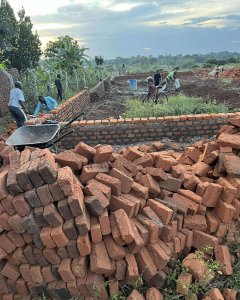
Rather than approaching development as an external intervention, the organisation emphasises working with local communities to design and implement projects together. When schools are constructed, the work is carried out with local labour and contractors wherever possible.
This approach ensures that projects are not imposed from outside but are shaped by the people who will ultimately use and maintain them.
Engaging local workers during construction also provides short-term employment opportunities and injects income into communities that may have limited economic activity. For some workers, participating in these projects offers experience that can lead to future work in construction or community infrastructure.
By involving local people in planning and implementation, the projects are more likely to reflect local needs and priorities. Communities often contribute land, labour or organisational support to ensure the project succeeds.
Villages of Life describes this approach as offering “a hand up, not just a handout.”
This philosophy recognises that communities already possess knowledge, skills and leadership. External support can help amplify those strengths rather than replace them.
For volunteers and supporters in Tasmania, this partnership model often becomes a key reason they remain involved. It provides reassurance that contributions are helping communities build their own capacity rather than creating dependency.
The result is a form of collaboration that connects communities across very different contexts. People in Tasmania contribute resources and support, while communities overseas contribute leadership, labour and long-term stewardship of the projects.
Over time, these relationships become the foundation for future initiatives and continued cooperation.
Share this contribution
One of the central contributions of Villages of Life has been its involvement in building schools in rural communities where access to education is limited or inconsistent.
For many villages in developing regions, the absence of reliable school infrastructure is one of the most significant barriers to long-term development. Without safe classrooms and basic facilities, children often miss years of schooling or are unable to attend school at all. Families may need to travel long distances to access education, which can make attendance difficult or unrealistic.
Villages of Life works with partner organisations and local communities to address this challenge by helping fund and coordinate the construction of school buildings. These projects typically involve multiple stages: identifying community needs, working with local partners to design the facilities, raising funds, and overseeing the construction process.
A key part of the organisation’s approach is ensuring that the work is carried out in collaboration with local people. Local builders, labourers and tradespeople are involved wherever possible. This not only provides employment within the community but also ensures that the facilities are constructed in ways that suit local conditions and materials.
By involving the local workforce, the projects contribute to the local economy as well as to education outcomes.
Once the buildings are completed, the schools become community assets. They provide spaces for children to learn, for teachers to work, and often for community gatherings or meetings. In some villages, schools also become centres of stability — places where children can experience routine, safety and opportunity.
Share this contributionJoin the CommitLocal community — get updates on local impact, organisations, and events.